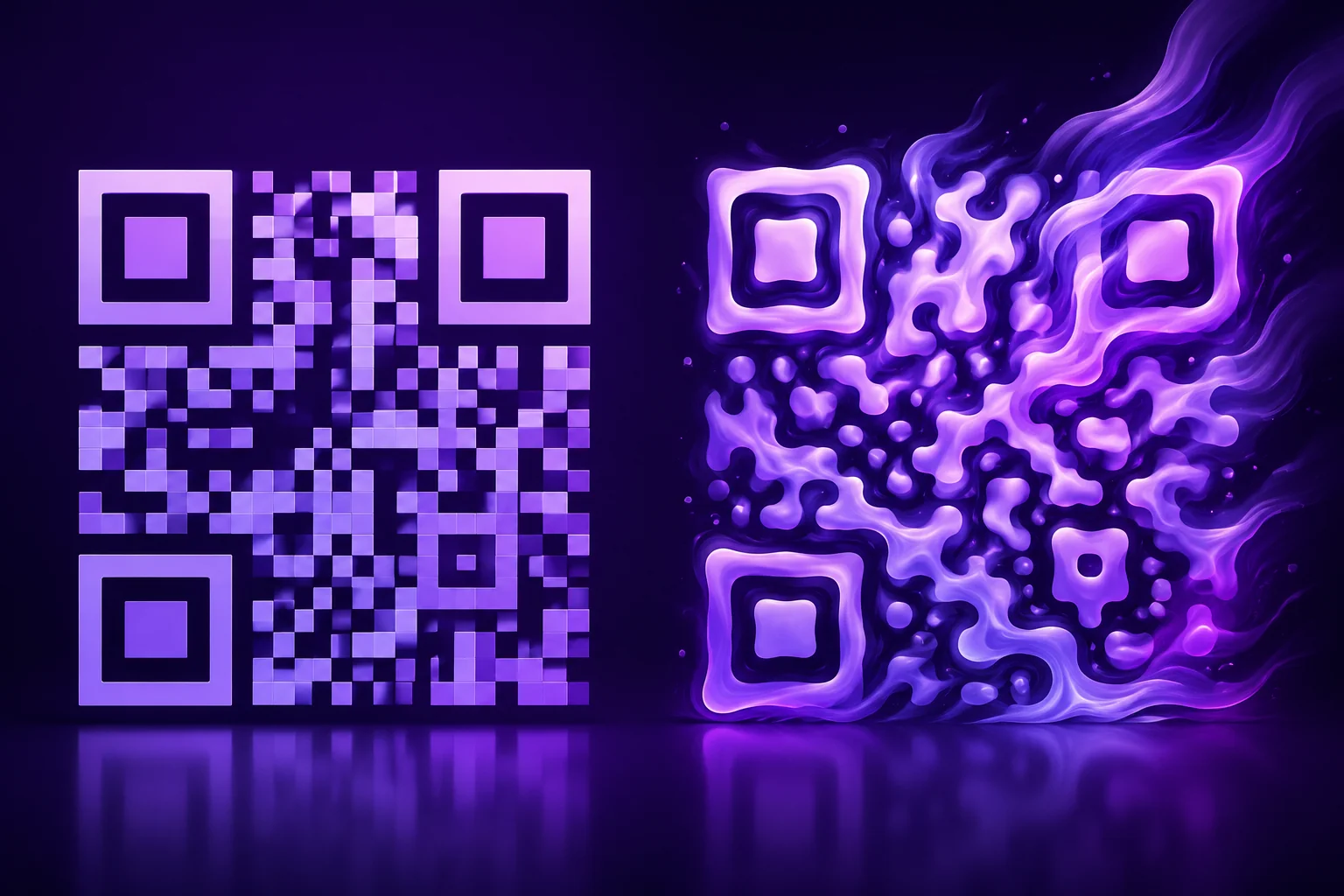
A static QR code stores its destination directly inside the pattern, so the link is fixed forever once you print it. A dynamic QR code stores a short redirect instead, which means you can change where it points, track every scan, and reuse the same printed code across campaigns. For almost any marketing, packaging, or event use, a dynamic QR code is the better choice — a static one only makes sense when the data never needs to change.
- Static QR codes are permanent: the destination is baked into the pattern and cannot be edited.
- Dynamic QR codes use a short redirect, so you can change the destination after printing.
- Only dynamic codes give you scan analytics — devices, locations, and trends over time.
- Dynamic codes are also simpler to scan because the pattern stays clean and low-density.
- Choose static for one-off, never-changing data; choose dynamic for anything you market or measure.
What is the difference between a static and a dynamic QR code?
The difference is where the destination lives. A static QR code encodes the full URL inside the black-and-white pattern itself, while a dynamic QR code encodes a short redirect URL that forwards the scanner to your real destination.
That single design choice changes everything. Because a static code carries the whole address, the pattern gets denser as the URL gets longer, and the destination is locked the moment it is generated. A dynamic code always carries the same short address no matter how long the final link is, and the real destination sits on a platform where you can update it whenever you like. To understand how this redirect layer works in depth, see our guide to dynamic QR codes.
Can you edit a QR code after printing it?
Only if it is dynamic. A static QR code is permanent — if the link breaks or the campaign moves, you have to design, reprint, and redistribute a brand new code. A dynamic QR code lets you swap the destination in seconds while the printed code stays exactly the same.
This matters more than it sounds. Imagine you print 5,000 flyers, then the landing page URL changes. With a static code, those flyers are now dead. With a dynamic code, you log in, point the same code to the new page, and every flyer keeps working. The same logic applies to product packaging, posters, business cards, and any printed asset with a long shelf life.
Can you track scans with a QR code?
Yes, but only with a dynamic QR code. Because each scan passes through the redirect layer, the platform can record it. A static code sends people straight to the destination with nothing in between, so there is no scan data to collect.
With a dynamic code you typically see total scans, unique scans, the devices and operating systems people used, their country and city, and how scans trend over days and weeks. That turns a printed code into a measurable channel: you can compare two posters, see which city responds best, or spot the exact day a campaign took off. If you want to turn those numbers into decisions, read how to make sense of link and scan analytics.
Which QR code type is easier to scan?
Dynamic codes are usually easier and faster to scan. Since they only encode a short redirect, the pattern stays simple and low-density, which phones read quickly even at small sizes or from a distance.
A static code that holds a long URL with campaign parameters becomes a dense grid of tiny modules. Dense codes are harder to print cleanly, harder to scan on curved surfaces like bottles, and more likely to fail at small sizes. Keeping the encoded data short is one of the quiet advantages of going dynamic.
When should you still use a static QR code?
Use a static QR code when the information is fixed and you will never need to change or measure it. Static codes work fine for data that lives inside the code itself rather than pointing to a web page.
- Wi-Fi credentials: a code that joins a guest network never needs editing.
- Plain contact cards: a vCard with a fixed name and number.
- Personal or one-off use: a quick link you do not need to track.
- Offline-only data: a short text payload with no destination to update.
For everything tied to marketing, packaging, events, or anything you want to measure, a dynamic code is the safer long-term bet.
How do dynamic QR codes pair with smart links?
A dynamic QR code and a smart link are two sides of the same routing layer. The QR code gets people from the physical world to a URL; a smart link decides which destination that URL should serve based on the visitor's device, OS, or region.
Put them together and one printed code can send iPhone users to the App Store, Android users to Google Play, and everyone else to your website — while you track every scan and edit the routing whenever a campaign shifts. If you are new to this idea, start with our explainer on what a smart link is, then add a dynamic QR code on top of it.
Frequently asked questions about static vs dynamic QR codes
Do dynamic QR codes expire?
The QR pattern itself does not expire, but the redirect depends on the platform that hosts it. As long as your account and the destination stay active, a dynamic code keeps working. Choose a reliable platform and keep your destinations live, and the printed code will scan for years.
Are dynamic QR codes slower because of the redirect?
No. The redirect happens in milliseconds, so the scanner experiences a single, near-instant jump to the destination. In practice dynamic codes often feel faster because the simpler pattern scans more reliably on the first try.
Can I convert a static QR code into a dynamic one?
Not directly — the destination is fixed inside a static code, so you cannot retrofit editing or tracking onto it. You generate a new dynamic code instead. The good news is that once it is dynamic, you never have to regenerate it again, because you can edit the destination going forward.
Is a dynamic QR code worth it for a small business?
Usually yes. The ability to fix a wrong link without reprinting, plus seeing which materials actually get scanned, tends to pay for itself quickly. For low-stakes, never-changing data a static code is fine, but most business use cases benefit from the flexibility.
Create editable, trackable QR codes with UseLinkio
Static QR codes are permanent and invisible to your analytics; dynamic QR codes stay editable, scan more reliably, and turn every print, poster, and package into a measurable channel. For nearly any campaign, the flexibility of a dynamic code outweighs the simplicity of a static one — and you only generate it once. Ready to print one code today and still control where it leads tomorrow? Create your first dynamic QR code with UseLinkio.